Trampolines Comparison
Zupapa vs ORCC: Which Trampoline Should You Buy?
Two brands that sell a complete trampoline with the stakes in the box. One sews the net to the mat and warrants the frame for a decade; the other names the ASTM test it passed and gives you the bigger footprint.
We may earn a commission when you buy through links on this page, at no extra cost to you. It never decides the ranking: the scoring method is published. How we're funded
Side by side
The picks on each side
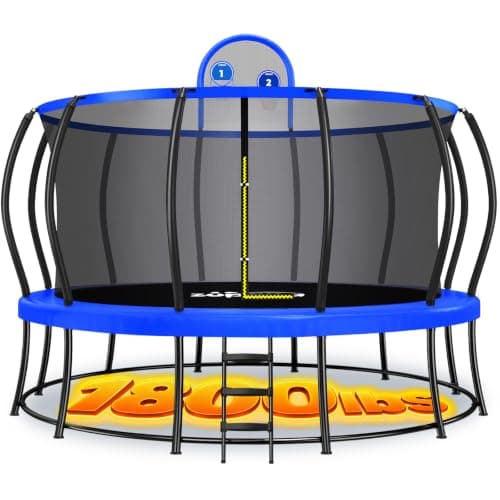
Pick Zupapa for the sewn-in net and the 10-year frame
Zupapa 15 ft No-Gap Trampoline
8.5 / 10Net and mat sewn together so there is no gap to fall through, a 6 ft net on foam-wrapped curved poles, wind stakes included and 10 years on the frame.
$664.99Amazon#ad · Price as of November 2, 2026 · Affiliate disclosure for the link to Zupapa 15 ft No-Gap Trampoline
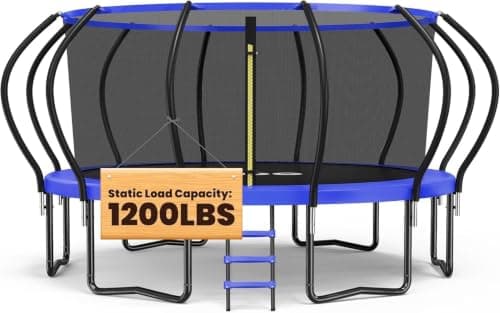
Pick ORCC for the named ASTM test and the bigger circle
ORCC 16 ft Trampoline (1200 lb series)
7.2 / 10A 16 ft round that states it passed ASTM F381-16 and CPSIA testing, with a pad up to 15 mm thick, wind stakes, ladder and T-hooks in the box.
Check price on Amazon#ad · Price as of November 2, 2026 · Affiliate disclosure for the link to ORCC 16 ft Trampoline (1200 lb series)
- ZupapaNo image
Pick the Zupapa 12 for a smaller lawn
Zupapa 12 ft Saffun Trampoline
8.5 / 10The same no-gap mat and stated 425 lb maximum on a 12 ft frame, with the stakes included and the same 10-year frame warranty.
Check price on Amazon#ad · Price as of November 2, 2026 · Affiliate disclosure for the link to Zupapa 12 ft Saffun Trampoline
Side by side
| Spec | Zupapa 15 ft No-Gap Trampoline | ORCC 16 ft Trampoline (1200 lb series) |
|---|---|---|
| Enclosure | Enclosure net and jumping mat sewn together (no gap); 6 ft high net | Not published |
| Poles | Outwardly curved net poles wrapped in 10 mm foam; long poles reach the ground | Curved, thickened foam-wrapped safety poles |
| Weight limit | Max weight capacity 425 lb (12, 14 and 15 ft models) | Not published |
| Padding | Not published | Spring pad up to 15 mm thick wrapping springs and frame |
| Frame | Hot-dip galvanized steel; steel poles up to 1.5 mm thick; W-shaped legs | Hot-dip galvanized steel tubes; legs have an extra black protective layer |
| Certification | TUV (Germany) and ASTM certifications stated for each trampoline | Passed CPSIA (heavy metals, phthalates) and ASTM F381-16 tests, per ORCC |
| Anchoring | Wind stakes included | Not published |
| Warranty | 10 years frame; 2 years mat, pad, net and springs; lifetime on other accessories | 6 months pads and nets; 1 year mats and springs; 2 years frame |
As published by each maker on the dates in the source list. Zupapa publishes a maximum weight capacity; ORCC leads with a series name rather than a per-jumper figure, so the two capacity rows are not the same kind of number.
Sewn-in net against curved poles
Zupapa's whole design argument is the seam. The enclosure net and the jumping mat are sewn together, so there is no join at the mat line for a child to force open and no span of net that can ride up over the springs. The net stands 6 ft high on poles that curve outward and are wrapped in 10 mm of foam, and the long poles run to the ground rather than clamping to the frame rail, which keeps the hardware out of the play area.
ORCC uses the more conventional arrangement done carefully: curved, thickened foam-wrapped poles, an enclosure net clipped to the frame, and a spring pad ORCC publishes as up to 15 mm thick wrapping both the springs and the frame. That pad figure is a real number and more than most of the category discloses, but a pad over the springs is still a cover rather than a removal: a jumper who hits the net low lands on padded coils, while on the Zupapa they land on mat. That difference is why Zupapa scores 9 and ORCC 7 on our enclosure metric, and it is the same argument that separates the whole field (trampoline net inside or outside the springs).
425 lb against a 1,200 lb headline
Zupapa publishes a maximum weight capacity of 425 lb across its 12, 14 and 15 ft frames. It is a single number covering the whole jumping load rather than a per-jumper limit, which is not ideal, but it is at least a figure you can work with: one adult and one child are inside it, four teenagers are not.
ORCC sells the 16 ft frame as part of a 1,200 lb series and publishes no single-jumper figure anywhere we could find. A four-figure number is a structural claim measured by loading a frame statically; it is not an invitation for six people. When a brand publishes only the big number, treat the per-user limit as unknown and apply the manual's jumper rules instead (trampoline weight limits, how many kids can jump on a trampoline).
Which standard each one names
This is the one row where ORCC is clearly ahead. ORCC states that its trampolines passed ASTM F381-16, the US standard covering trampoline components, assembly, use and enclosures, and separately that they passed CPSIA testing for heavy metals and phthalates, which is a children's-product requirement rather than a trampoline one and is rarely mentioned at all. Zupapa states TUV (Germany) and ASTM certifications for each trampoline without naming the designation, which is the common form of the claim and a step less specific.
Both are well ahead of the frames that name nothing. If certification by designation is your deciding factor, Jumpzylla also names F381-16 and ships an anchor kit and ladder (Zupapa vs Jumpzylla).
What is in the box, and the warranty
Both brands sell a complete trampoline, which is the reason they appear on so many shortlists. Zupapa includes wind stakes and ships a self-locking frame that assembles with no screws, with the tools and a video tutorial; ORCC includes the enclosure net, an anti-skid ladder, U-shaped wind stakes, gloves and T-hooks, and publishes an assembly estimate of about an hour and a half.
The warranties then diverge sharply. Zupapa warrants the frame for 10 years, with 2 years on the mat, pad, net and springs and a lifetime claim on other accessories. ORCC warrants the frame for 2 years, the mat and springs for 1 year and the pad and net for 6 months. Since the pad and net are the two parts that the sun destroys first, that six-month figure is the one to notice before you buy (when to replace a trampoline mat and net).
Choose Zupapa if / choose ORCC if
Choose Zupapa if the trampoline is for children and you want the gap engineered out, if you want ten years on the frame, or if a screwless assembly appeals. Zupapa is also the better fit for a smaller lawn, because the 12 ft Saffun carries the same no-gap mat and the same stated maximum (best 12ft trampolines).
Choose ORCC if you want the biggest round footprint of the two and you value a named ASTM and CPSIA test result, and you are prepared to buy a replacement pad and net earlier than you would on a Zupapa. Where the two sit against the rest of the field is on best 15ft trampolines and best 16ft trampolines, and the brand-level picture is on best trampoline brands.
In detail
Every contender, in full
Pick Zupapa for the sewn-in net and the 10-year frame
Zupapa 15 ft No-Gap Trampoline
Scored on the trampolines rubric
Net and mat sewn together so there is no gap to fall through, a 6 ft net on foam-wrapped curved poles, wind stakes included and 10 years on the frame.
Published specs (tap for source)
- Enclosure & edge design (30%)
- 9
- Anchoring provision (20%)
- 9
- Rated capacity & structure (20%)
- 7
- Certification & standards (15%)
- 9
- Install reality (15%)
- 8
Why we picked it
- Net sewn to the mat, so there is no gap for a foot to slip between net and springs
- Wind stakes are in the box, not a separate purchase
- Both TUV and ASTM certification stated, with a 425 lb published capacity
Worth knowing
- Zupapa publishes one 425 lb figure and does not separate a single-jumper limit from a structural limit
- Spring pad thickness is not published on the product page
- Frame height and net-to-ground clearance are not published on the listing
Skip it if…
…you want a separately published single-jumper limit; Zupapa gives one headline capacity only.
#ad · Price as of November 2, 2026 · Affiliate disclosure for the link to Zupapa 15 ft No-Gap Trampoline
Pick ORCC for the named ASTM test and the bigger circle
ORCC 16 ft Trampoline (1200 lb series)
Scored on the trampolines rubric
A 16 ft round that states it passed ASTM F381-16 and CPSIA testing, with a pad up to 15 mm thick, wind stakes, ladder and T-hooks in the box.
Published specs (tap for source)
- Enclosure & edge design (30%)
- 7
- Anchoring provision (20%)
- 9
- Rated capacity & structure (20%)
- 5
- Certification & standards (15%)
- 10
- Install reality (15%)
- 5
Why we picked it
- ASTM F381-16 named
- Wind stakes and ladder in the box
- Foam-wrapped curved poles and a stated 15 mm pad
Worth knowing
- No single-jumper limit published; 1200 lb is a static load figure
- Shortest warranty of any trampoline here (6 months on pad and net)
- Net-to-mat attachment method is not described
Skip it if…
…you want more than a 2-year frame warranty or a stated per-jumper limit.
#ad · Price as of November 2, 2026 · Affiliate disclosure for the link to ORCC 16 ft Trampoline (1200 lb series)
Pick the Zupapa 12 for a smaller lawn
Zupapa 12 ft Saffun Trampoline
Scored on the trampolines rubric
The same no-gap mat and stated 425 lb maximum on a 12 ft frame, with the stakes included and the same 10-year frame warranty.
Published specs (tap for source)
- Enclosure & edge design (30%)
- 9
- Anchoring provision (20%)
- 9
- Rated capacity & structure (20%)
- 7
- Certification & standards (15%)
- 9
- Install reality (15%)
- 8
Why we picked it
- Sewn-in net with no gap at the mat edge
- Wind stakes and assembly tools ship in the box
- 10-year frame warranty published
Worth knowing
- Single headline capacity; no separate single-jumper figure
- A 12 ft mat is tight for two older kids jumping together (CPSC says one at a time anyway)
- Spring count for the 12 ft is not stated on the page
Skip it if…
…you have teens or adults who will use it; the published capacity is the same as the 15 ft but the mat is much smaller.
#ad · Price as of November 2, 2026 · Affiliate disclosure for the link to Zupapa 12 ft Saffun Trampoline
How we picked
Why these picks made the list
Every pick is scored from the maker's published specs, manual and warranty terms on a safety rubric we publish (net and edge design, anchoring, rated capacity, standards, install reality), and the sources behind each number are listed at the bottom of the page.
Scores are our editorial judgment of that published information. Nobody pays for placement, and an unpublished spec is never guessed upward. See every rubric and weight.
Trampolines rubric
- Enclosure & edge design
- 30%
- Anchoring provision
- 20%
- Rated capacity & structure
- 20%
- Certification & standards
- 15%
- Install reality
- 15%
FAQ
Questions parents ask
Is Zupapa or ORCC better?
What is the weight limit on a Zupapa trampoline?
Does ORCC publish a single-jumper weight limit?
Do both brands include anchors?
Which has the better warranty?
Related
Keep reading
- Zupapa vs JumpzyllaZupapa against the other complete-kit brand.
- Zupapa vs SkywalkerTwo different no-gap designs.
- Best 16ft trampolinesWhere the ORCC 16 ranks.
- Best 15ft trampolinesWhere the Zupapa 15 ranks.
- Best trampoline brandsBoth brands in the wider field.
- When to replace a mat and netWhy a 6-month net warranty matters.
Update log
What changed
- First published.
Receipts
Sources
Capacities, materials, anchoring provisions and warranty terms come from the maker's own listings and manuals (or a named retailer's listing where the maker doesn't publish them). Safety guidance is linked to CPSC, the AAP, ASTM or the study it came from. Buy buttons open the live Amazon listing, so you always see today's price. Read the full method.