Install & Anchoring Guide
How to Anchor a Swing Set on Grass, in Soft Ground, With or Without Concrete
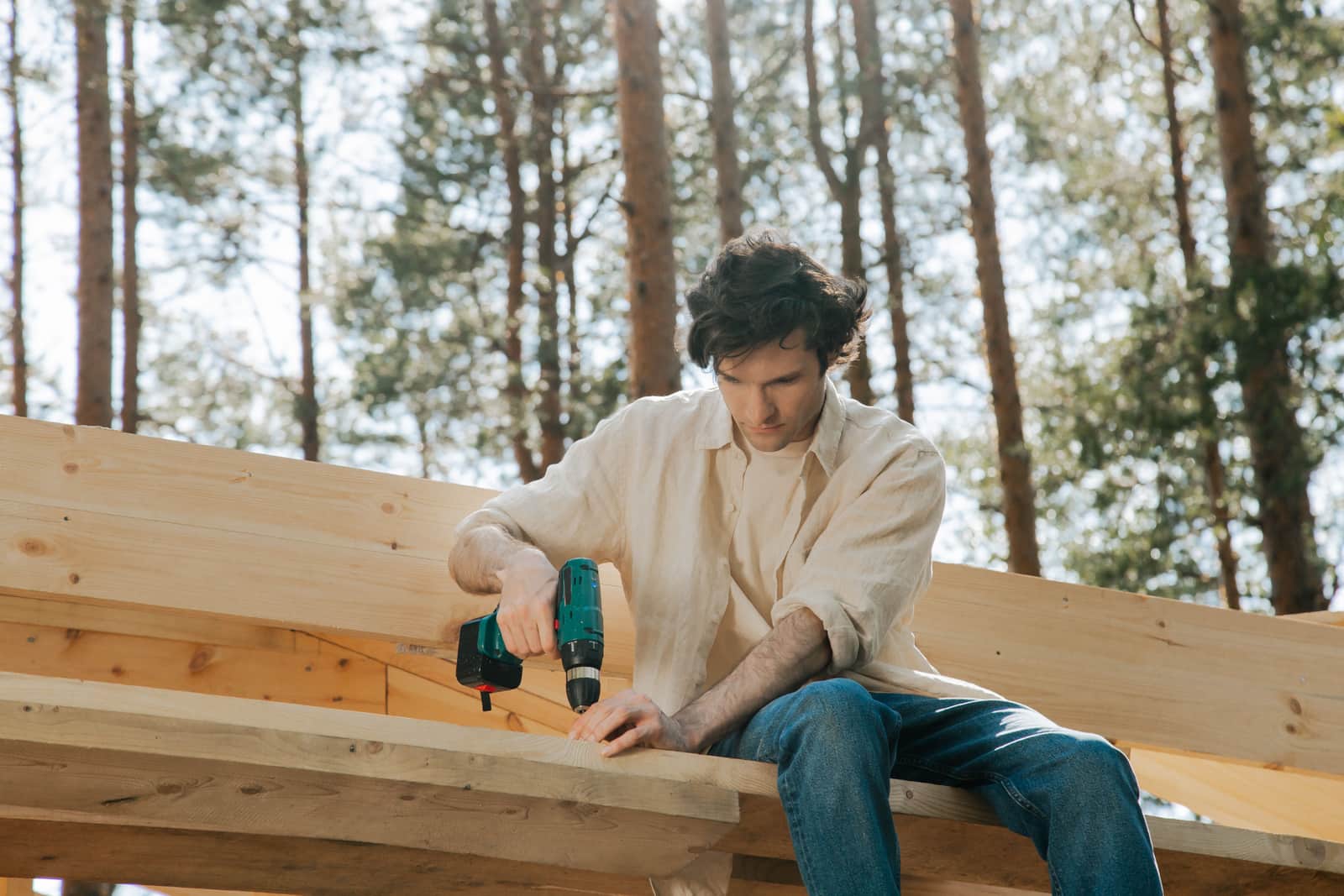
Twist an auger into solid soil beside each post or ground rail, bolt it to the wood, cover it with the surfacing. That is the method Backyard Discovery publishes and CPSC's handbook asks for. Metal legs bolt through pre-drilled feet. Here is each ground type, and when concrete is the answer.
We may earn a commission when you buy through links on this page, at no extra cost to you. It never decides the ranking: the scoring method is published. How we're funded
The rules: CPSC and the makers
CPSC's handbook: choose a level location, because a level set is less likely to tip and its loose fill less likely to wash away; play equipment "may need to be restrained with anchors to keep it from tipping over while in use"; follow the manufacturer's instructions; bury or cover the anchors. Backyard Discovery includes stakes and instructions with every set and says to use solid soil or clay, not loose soil or sand. Gorilla sells ground stakes for its swing beam legs and recommends new ones as annual maintenance. Swing-N-Slide sells its Anchor-It kit with plans and says the site must be level within 3 in. PlayStar prints the numbers for its augers: 2-5/8 in diameter, 15 in long, 12-14 in in the ground. The kits are ranked on best swing set anchors.
Step by step: a wooden set
- Assemble the set in place on level ground, with the 6 ft use zone around it and twice the beam height in front of and behind the swings (safety zone).
- Find the anchor points in the manual. Backyard Discovery: each set has a specific stake placement noted in the instructions, usually beside the ground boards. Gorilla: the swing beam legs. PlayStar's kit also anchors slides and climbers with separate bolts.
- Twist each auger into the ground alongside the board until its top plate sits against the wood. PlayStar's go 12-14 in deep.
- Using the anchor's top plate as a template, drill through the rail if there is no pre-drilled hole; Backyard Discovery's instructions give the bit size.
- Bolt through with the supplied hardware: bolt, lock washer, barrel nut (Backyard Discovery) or hot-dipped galvanized lag screw and washer (PlayStar). CPSC wants lock washers or self-locking nuts on every bolt and no bolt protruding past its nut by more than its own diameter.
- Lay the protective surfacing over the anchors: 9 in of loose fill for equipment up to 8 ft, per the handbook, so no anchor is a trip hazard.
- Recheck the bolts after the first month and each spring; Gorilla's advice to replace stakes annually is a good cue.
Step by step: a metal set
- Backyard Discovery's metal sets ship with feet: set each leg into its foot so the hole in the foot lines up with the hole at the bottom of the leg.
- Twist the stake into the ground beside each foot until its top opening aligns with the foot's hole.
- Bolt stake, foot and leg together with the supplied bolt, lock washer and barrel nut.
- For a round-tube A-frame with no pre-drilled feet (Trekassy includes its own anchors; Sportspower does not describe its method), a U-stake over the base tube such as Skywalker's 12.5 in stake fits legs up to 2 in.
- Cover with surfacing as above. Metal sets get the same 9 in.
Soft ground and sand
Backyard Discovery: solid soil or clay, not loose soil or sand. In sand or fresh fill, an auger does not bear on anything; the fixes are a longer auger, a wider auger (PlayStar's 2-5/8 in claims about 30% more holding power than a standard one, its own comparison), or a concrete footing. In saturated clay the auger holds until the clay dries and shrinks; recheck after a dry spell. A slope compounds all of this: swing set on a slope.
With concrete: footings
Some makers' manuals specify concrete footings for taller sets or for sites with no holding soil; the general method is a post-hole below frost depth at each anchor point, the anchor or a bracket set in the wet concrete, and the set bolted to it after the concrete cures. Lifetime notes its sets are free-standing with "no need for cement," and Backyard Discovery's stakes are designed so the set can be moved later, which a footing cannot. A set on an existing slab is a different problem, and CPSC says not to put play equipment over concrete at all: swing set on concrete.
Kits that fit
Mistakes to avoid
- Anchoring the beam legs and not the tower. The tower is the part with the fall height.
- Leaving the anchor plate above the surfacing. CPSC: exposed anchors are trip hazards.
- Anchoring into fresh fill or a sandbox. Solid soil or clay only.
- Skipping the level check. Swing-N-Slide wants the area level within 3 in; a set on a grade tips downhill first.
How we picked
Scored on paper, and we say so
Most review sites say they tested everything. We didn't test these, and we say so. Every pick is scored from the maker's published specs, manual and warranty terms on a safety rubric we publish (net and edge design, anchoring, rated capacity, standards, install reality), and the sources are listed at the bottom of the page.
Scores are editorial judgments from that published information, not field or lab results. Nobody pays for placement, and an unpublished spec is never guessed upward. See every rubric and weight.
Anchor kits rubric
- Holding design
- 30%
- Fit range
- 20%
- Material & corrosion resistance
- 20%
- Instructions & completeness
- 15%
- Warranty
- 15%
FAQ
Questions parents ask
How do you anchor a swing set to the ground?
How do you anchor a swing set without concrete?
How do you anchor a swing set in soft ground?
Do swing sets need to be cemented?
How deep should swing set anchors be?
Related
Keep reading
Update log
What changed
- First published.
Receipts
Sources
- 1.CPSC Publication 324, Outdoor Home Playground Safety Handbook (PDF; fetched Sep 22, 2026)
- 2.Backyard Discovery: How to Secure a Swing Set to the Ground (checked Sep 22, 2026)
- 3.PlayStar: Playset Anchors, dimensions and hardware (checked Sep 22, 2026)
- 4.Gorilla Playsets: Ground Stakes (Pair), annual replacement (checked Sep 22, 2026)
- 5.Swing-N-Slide: Anchor-It Ground Anchors; Ranger site note, level within 3 in (checked Sep 22, 2026)
- 6.SwingSetMall (retailer): Lifetime Monkey Bar Adventure, free-standing, no cement (checked Sep 22, 2026)
- 7.Skywalker Trampolines: Wind Stakes 4-Pack, legs up to 2 in (checked Sep 22, 2026)
We don't lab-test trampolines, swing sets or their parts, and we don't pretend to. Capacities, materials, anchoring provisions and warranty terms come from the maker's own listings and manuals (or a named retailer's listing where the maker doesn't publish them). Safety guidance is linked to CPSC, the AAP, ASTM or the study it came from. Prices are set by Amazon and change often, so we don't print them. Where a figure isn't published, we say so. Read the full method.