Trampolines Guide
What Size Trampoline Should I Get? Frame Size, Mat Size and the Clearance Makers Ask For
The frame diameter on the box is not the mat you jump on, and the mat you jump on is for one child at a time. Here is how to measure the yard, what each maker asks for around the frame, and which size fits which family.
We may earn a commission when you buy through links on this page, at no extra cost to you. It never decides the ranking: the scoring method is published. How we're funded
Measure the yard first
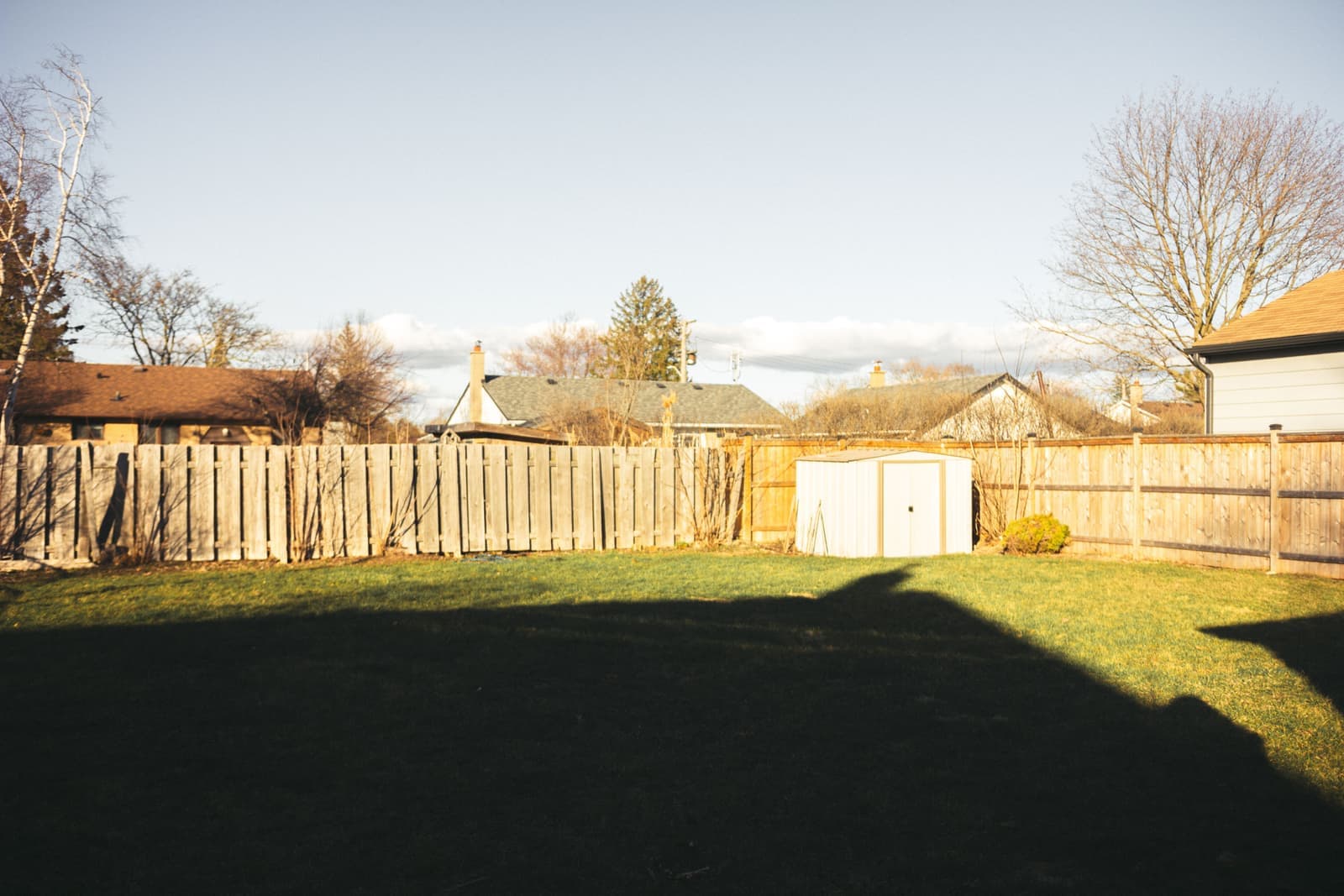
CPSC's guidance is to place the trampoline away from structures, trees and other play areas, on ground that is level. Pace out the largest flat area with nothing overhead (Jumpflex's HERO is 8.9 ft tall to the top of the net; ACON's 16 HD is 130 in) and nothing hard within reach of the net. Then subtract the clearance below. Slopes matter: a round frame can be shimmed on a slight grade, a rectangle cannot, and any frame on a slope needs anchoring on the downhill legs first; see how to anchor a trampoline.
What each maker asks for around the frame
| Model | Frame / footprint | Clearance the maker states | Space to allow |
|---|---|---|---|
| Jumpflex FLEX 12 | 13.5 ft overall (curved poles) | 3.3 ft all round | about 20 ft circle |
| Jumpflex HERO 14 | 15.1 ft overall | 3.3 ft all round | about 21.7 ft circle |
| Jumpzylla 12 / 14 / 16 | 12 / 14 / 16 ft | 3-5 ft around and above | 15-17 / 17-19 / 19-21 ft (Jumpzylla's own yard-space figures) |
| Springfree R79 (10 ft mat) | 10 x 10 ft mat | 5 ft each side | 20 x 20 ft |
| Springfree O92 (oval) | 8 x 13 ft mat | 5 ft each side | 18 x 23 ft |
| Springfree S155 (square) | 13 x 13 ft mat | 5 ft each side | 23 x 23 ft |
| ACON 16 HD rectangle | 17 x 9.8 ft | not stated on the page; CPSC: away from structures | plan 23 x 16 ft |
Clearance figures as published on each maker's page, September 22, 2026. Where a maker gives none, the last column is our arithmetic using 3 ft.
Mat size vs frame size
The number on the box is the frame diameter. The mat is smaller by the width of the springs and pad on both sides: Jumpflex publishes a 12.1 ft mat inside its 14 ft HERO and a 10.5 ft mat inside the 12 ft FLEX, and warns buyers to watch for brands that advertise a big overall diameter with a small mat. Springfree quotes the mat directly (10 ft mat on the R79, which needs a 20 ft space), so a "10 ft Springfree" and a "12 ft spring trampoline" have similar jumping areas. Comparing mats, not frames, is the honest way to compare sizes across brands.
By family: 1, 2 or 3 kids
One child. A 12 ft round (10-11 ft of mat) is plenty and is the easiest size to anchor and cover. Two kids. Still one at a time on the mat; a 14-15 ft round gives the jumper more room and gives the waiting child no excuse to climb in. Three or more. The temptation is a 16 ft or a rectangle so they can all jump; CPSC's rule is one at a time and the AAP's finding is that most injuries happen with multiple jumpers, so the extra size buys space for one bigger jumper, not room for a crowd. If any child is under 6, CPSC says no full-size trampoline at all; see trampoline age recommendations. Teenagers and adults should size for the printed limit, not the diameter: trampoline weight limit.
One pick per size
Mistakes to avoid
- Buying the frame size the yard fits with no clearance. The clearance is where a child lands if the net fails.
- Buying a 16 ft so three kids can jump together. One at a time is the rule at any size.
- Putting a rectangle on a slope. Long frames show the grade; see round vs rectangle.
- Forgetting the height. A 9 ft net under a tree limb or a roof eave is a problem the tape measure would have caught.
How we picked
Scored on paper, and we say so
Most review sites say they tested everything. We didn't test these, and we say so. Every pick is scored from the maker's published specs, manual and warranty terms on a safety rubric we publish (net and edge design, anchoring, rated capacity, standards, install reality), and the sources are listed at the bottom of the page.
Scores are editorial judgments from that published information, not field or lab results. Nobody pays for placement, and an unpublished spec is never guessed upward. See every rubric and weight.
Trampolines rubric
- Enclosure & edge design
- 30%
- Anchoring provision
- 20%
- Rated capacity & structure
- 20%
- Certification & standards
- 15%
- Install reality
- 15%
FAQ
Questions parents ask
What size trampoline for 2 kids?
What size trampoline for 3 kids?
How much space do you need around a trampoline?
Is a 12 ft trampoline big enough?
What size trampoline for adults?
Related
Keep reading
Update log
What changed
- First published.
Receipts
Sources
- 1.CPSC Publication 085, Trampoline Safety (PDF; fetched Sep 22, 2026)
- 2.Jumpflex USA: HERO 14ft and FLEX 12ft Dimensions/Specs and yard space (checked Sep 22, 2026)
- 3.Jumpzylla: size chart with yard space and clearance (checked Sep 22, 2026)
- 4.Springfree Trampoline: R79, O92 and S155 space required (checked Sep 22, 2026)
- 5.ACON USA: ACON 16 HD size (checked Sep 22, 2026)
- 6.Skywalker Trampolines: 16' Round product page (checked Sep 22, 2026)
We don't lab-test trampolines, swing sets or their parts, and we don't pretend to. Capacities, materials, anchoring provisions and warranty terms come from the maker's own listings and manuals (or a named retailer's listing where the maker doesn't publish them). Safety guidance is linked to CPSC, the AAP, ASTM or the study it came from. Prices are set by Amazon and change often, so we don't print them. Where a figure isn't published, we say so. Read the full method.