Install & Anchoring Guide
How to Anchor a Trampoline on Concrete, Artificial Grass or Sand (and Why You Should Reconsider the Concrete)
A stake will not go into a slab, and CPSC says not to put play equipment over concrete in the first place. Here is what actually works on each hard or loose surface, what to put around the frame so a fall does not land on pavement, and when to move the trampoline instead.
We may earn a commission when you buy through links on this page, at no extra cost to you. It never decides the ranking: the scoring method is published. How we're funded
What CPSC says about hard surfaces
The Outdoor Home Playground Safety Handbook: "Do not install home playground equipment over concrete, asphalt, or any other hard surface. A fall onto a hard surface can result in serious injury to the equipment user." Its trampoline guide separately says to place the trampoline away from structures, trees and other play areas, and that enclosures can help prevent falls off. A net reduces the chance of a child landing outside the frame; it does not make it impossible, and a child who does will land on whatever is there. The honest advice for a slab is to move the trampoline to the lawn. If the slab is the only flat ground, the rest of this page is how to do it as safely as the surface allows.
Concrete and pavers
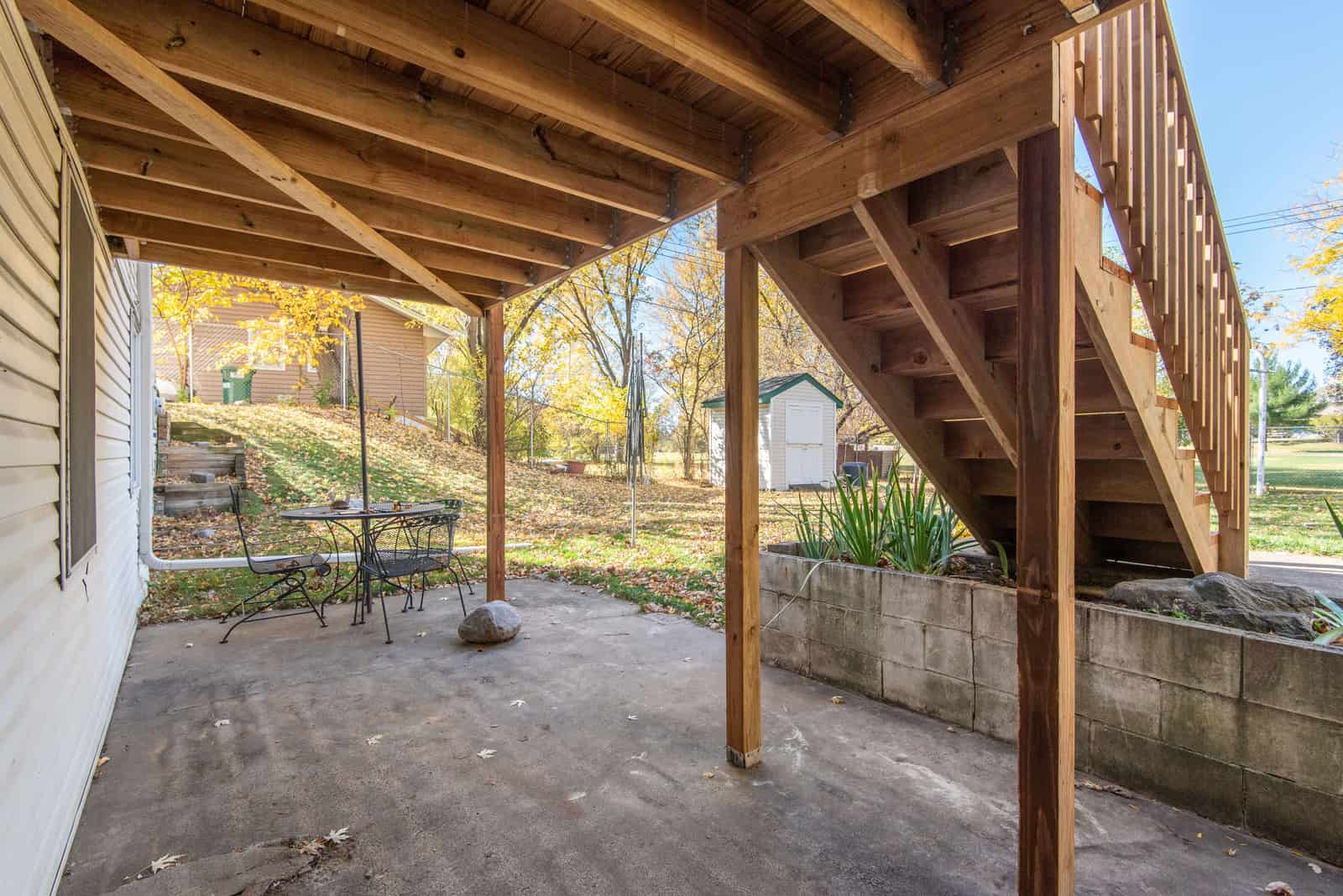
What does not work: sandbags on the legs (a gust that lifts a 15 ft frame lifts 40 lb of sand with it), rubber-footed legs alone, and any stake kit. What does: drilling the slab and setting masonry anchors (sleeve or wedge anchors with an eye, from a hardware store; we do not cover them as products) at each leg, then running the trampoline maker's straps from the base tube to the eyes. ACON's and Jumpflex's kits supply the straps; the auger is replaced by the masonry eye. Pavers set on sand are worse than a slab: an anchor set into one paver lifts the paver. Drill through to the base or move the trampoline. Either way, the frame legs on concrete need a rubber pad under each foot so the galvanizing does not wear through, and the pit-edge problem of an in-ground trampoline is the same one: surround the frame with something soft.
Artificial grass
Turf sits on a compacted aggregate base. Cut a small cross in the turf at each anchor point, screw the auger through the cut into the base and the soil beneath, strap the leg, and lay the flaps back. The auger's hold depends on what is under the turf: a deep compacted base holds well, a thin base over clay behaves like clay. Check the tension after the first wet week. Turf itself is not protective surfacing under CPSC's definition (it is a carpet over aggregate), so the surround rule below applies.
Sand and loose soil
Backyard Discovery's stake guidance is the plain version: anchors want solid soil or clay, not loose soil or sand. In sand a U-stake pulls out by hand. Use the longest auger you can drive, a strap over the base tube, one at every leg, and accept that the hold is seasonal: recheck after rain and wind. A beach-lot trampoline is the case where an in-ground pit with a retaining wall (TDU includes one) is the durable answer, because a frame inside a wall does not need the sand to hold it.
What goes around the frame
Whatever the anchoring, the ground within the net's fall radius should not be pavement. The handbook's 6 ft rule and loose-fill depths are written for playground equipment, and loose fill cannot go on concrete; the surface that can is a rubber tile with a published fall-height rating, laid around the frame on the slab. PlayFall's 1.75 in tile is rated to 4 ft, which covers a fall from a 3 ft trampoline edge and not a fall from a 6 ft net top. That is the ceiling of what a slab installation can offer, and it is why the lawn is the better answer. Surfacing in general: best playground mulch and surfacing.
The parts that fit
The ordinary-ground method is on how to anchor a trampoline; the kits on best trampoline anchors.
How we picked
Scored on paper, and we say so
Most review sites say they tested everything. We didn't test these, and we say so. Every pick is scored from the maker's published specs, manual and warranty terms on a safety rubric we publish (net and edge design, anchoring, rated capacity, standards, install reality), and the sources are listed at the bottom of the page.
Scores are editorial judgments from that published information, not field or lab results. Nobody pays for placement, and an unpublished spec is never guessed upward. See every rubric and weight.
Playground surfacing rubric
- Impact attenuation
- 30%
- Coverage & depth
- 20%
- Material & safety claims
- 20%
- Certification & standards
- 15%
- Install reality
- 15%
Anchor kits rubric
- Holding design
- 30%
- Fit range
- 20%
- Material & corrosion resistance
- 20%
- Instructions & completeness
- 15%
- Warranty
- 15%
FAQ
Questions parents ask
Can you put a trampoline on concrete?
How do you anchor a trampoline on artificial grass?
How do you anchor a trampoline in sand?
Do sandbags anchor a trampoline?
Related
Keep reading
Update log
What changed
- First published.
Receipts
Sources
- 1.CPSC Publication 324, Outdoor Home Playground Safety Handbook (PDF; fetched Sep 22, 2026)
- 2.CPSC Publication 085, Trampoline Safety (PDF; fetched Sep 22, 2026)
- 3.Backyard Discovery: How to Secure a Swing Set to the Ground, solid soil vs sand (checked Sep 22, 2026)
- 4.ACON USA: Ground Anchor Kit (2pcs), straps and method (checked Sep 22, 2026)
- 5.Jumpflex USA: ANCHORKIT PRO (checked Sep 22, 2026)
- 6.KidWise: PlayFall tiles, 4 ft fall-height rating (checked Sep 22, 2026)
- 7.Trampolines Down Under: The Classic 14' In-Ground System, retaining wall included (checked Sep 22, 2026)
We don't lab-test trampolines, swing sets or their parts, and we don't pretend to. Capacities, materials, anchoring provisions and warranty terms come from the maker's own listings and manuals (or a named retailer's listing where the maker doesn't publish them). Safety guidance is linked to CPSC, the AAP, ASTM or the study it came from. Prices are set by Amazon and change often, so we don't print them. Where a figure isn't published, we say so. Read the full method.